Staff choose what enters
The workflow starts with staff. Parents and participants don't publish into the controlled gallery, which keeps responsibility for shared content where it belongs.


Sharing media through group chats, public albums, and cloud folders feels convenient, until the difficult questions begin. Who can see the children in these photographs? Who is allowed to upload? How is inappropriate content caught? Who made the last moderation decision, and where is that written down? And how does a parent find today's activities in a folder of three thousand unsorted files? CampOrganizer replaces that with a gallery built around the session, its families, and the responsibilities that come with children's media. Each session has its own photo and video gallery. Staff add the media; the session's parents, participants, and authorized staff view it. Photos are converted into fast-loading previews with the originals preserved; videos become adaptive streams that start quickly on web and mobile; and everything is grouped by day, so families follow the program as it happened. Every upload is screened automatically for potentially explicit content. Anything that crosses the threshold is hidden and queued for review; viewers can report media too, and enough independent reports hide an item pending review. A human administrator or curator makes the final call, nothing is silently deleted by an algorithm, and every moderation action is recorded. A camp gallery is a collection of children's faces, activities, relationships, and locations. It should be treated like one.
The workflow starts with staff. Parents and participants don't publish into the controlled gallery, which keeps responsibility for shared content where it belongs.
Media is processed for reliable delivery and screened for potentially explicit content before it appears. Families see ready, checked media, never half-processed uploads or something published on an algorithm's guess.

Parents, participants, and staff can report an item. Enough independent reports hide it pending review, a human safety net on top of the automated one.

Screening and reports can hide and queue; only an administrator or curator approves or removes. A false positive costs a temporary review. A silent auto-deletion could cost a legitimate memory, so the platform doesn't do it.

Moderation actions are written to an append-only history: what was flagged, what was decided, and by whom, not an unexplained disappearance from a shared folder.
A staff member picks the day's photos and videos and uploads them straight into the right session.

Files land in private storage; photos get optimized previews with originals kept, videos get a poster and an adaptive stream, 4K source footage included.

The content check runs on everything. Anything potentially explicit is hidden and queued before a family could see it.

Once processing and checks are done, media shows up in the day-grouped gallery.
Parents and participants open the gallery in Family and Explorer, and save a single moment or a whole day.

A concern hides the item after enough independent reports; an administrator or curator reviews, decides, and leaves a recorded moderation decision.

See the moments, feel connected across the distance, download the memories worth keeping, and report anything that looks wrong.

Revisit the activities, friendships, and achievements of their own session in Explorer.

Upload the day's media from the program context instead of messaging photos to families one by one, and see when something they uploaded was flagged.
Review the moderation queue, approve or remove, control access, with a complete audit trail behind every decision.

Give families a genuine window into the program while holding a defensible model for access, screening, human oversight, and accountability.

every gallery belongs to a defined session, its Teams, and its activities.

viewers are known identities with established family relationships, a parent sees their own child's session, not a forwardable URL.

publishers are the session's staff; moderation sits with explicitly designated administrators and curators.

the gallery lives beside onboarding, schedule, Feed, and contacts, one more reason families never leave the app.

a photo of the day answers the question a parent would otherwise have asked a counselor.
flags, reports, approvals, and removals stay part of the platform's accountable history.
A photograph from today's activities answers the quiet question, is everything okay?, better than any status update, and closes the distance without interrupting staff.
One session gallery replaces repeated photo messages and duplicate uploads, and 4K footage goes in as-is; the platform does the preparing.

Access follows known users and their session relationship, not possession of a link that can be forwarded forever. Publication belongs to the organization, not to whoever created a shared folder first.
Day grouping, optimized previews, and smooth streaming keep a growing collection browsable, and downloads let families keep the moments that matter.

"Who can see my child's photos, and what happens if something is wrong?", private storage, session access, automatic screening, viewer reporting, human review, and an audit trail. A concrete answer, not a shrug.

When the chat thread dies and the drive link rots, the gallery is still there, connected to the session it came from.
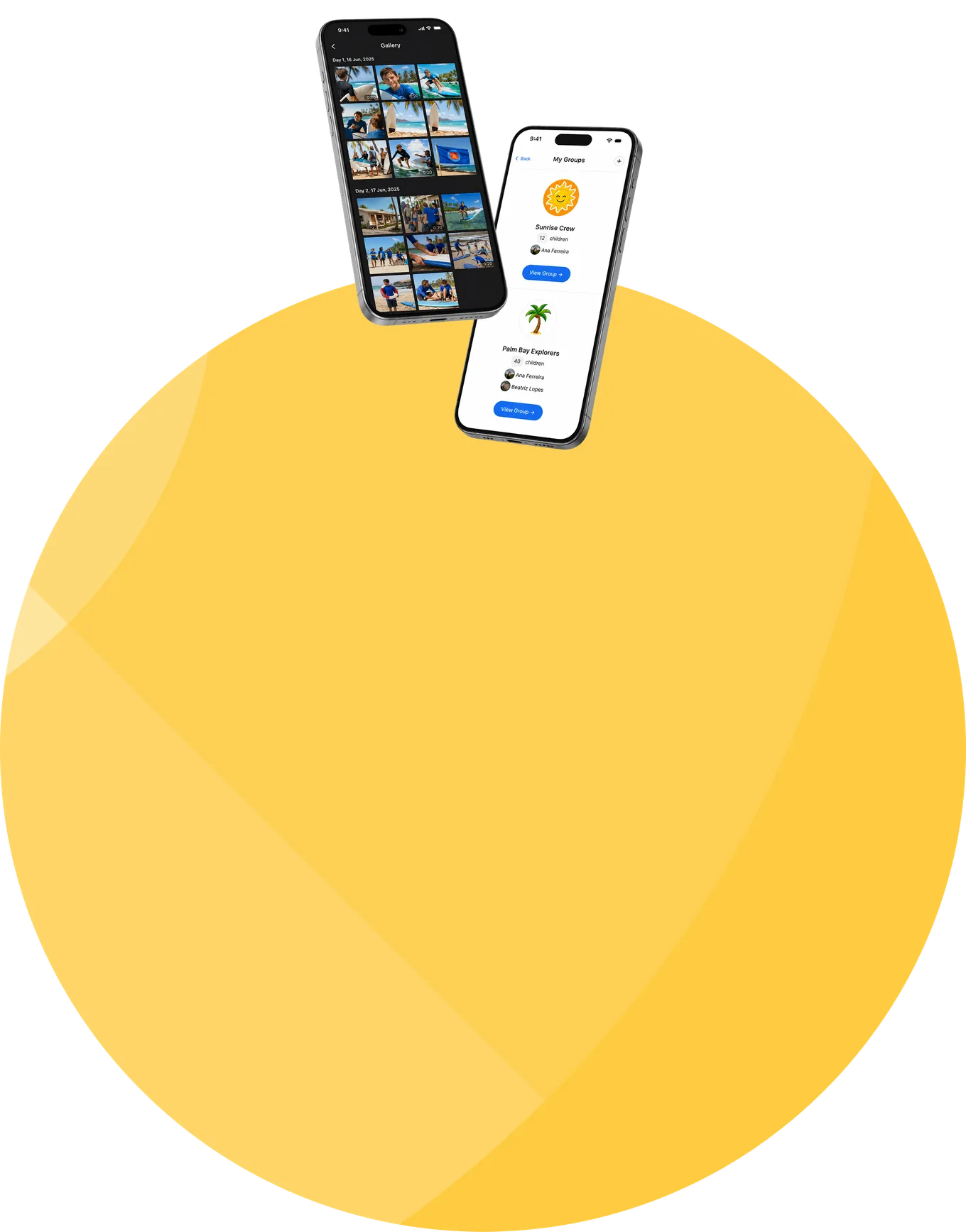
In a 30-minute demo, we'll show each session's private gallery end to end, staff upload (4K included), day-by-day browsing, downloads, automatic screening, viewer reporting, and accountable human moderation.
© 2026 CampOrganizer. All rights reserved.